During her career, Bette Davis was hardly ever afraid to take a risk. She played women who were selfish, mean-spirited, murderous or even crazy and she built her legacy by always making it clear how willing she was to portray all the aspects of her characters without any attempt to soften their personalities for the sake of winning the sympathy of either the audience or the other characters in the story. But even if she might be mostly remembered for these kinds of unforgiving, mysterious or even cruel women, she also found success with more vulnerable or self-doubting parts that benefited from her strong and distinct screen personality just as much since they always created an intriguing variation of her usual confidence and conviction which made those characters much stronger and determined than initially expected. And so those vulnerable and sometimes repressed characters were nonetheless the strongest figures in their movies because their weaknesses and restraints were displayed by an inner strength and Bette Davis’s ability to use her own intensity on the screen to portray a vast variety of emotions and emotional states. In this aspect, Bette Davis resembled the other leading ladies of her era who all tended to be the centre of their pictures and toward whom all things and storylines gravitated almost naturally irrespective of the kind of character they were playing. The main difference between these actresses could be found in the extent of this gravitation and if they were constant individual players, stars in the first row, or if they allowed a dual leadership at the top of their movies. A Susan-Hayward-picture was almost always a one-woman-show, Rosalind Russell was rarely not her movie’s sole central aspect and Joan Crawford also mainly preferred to be a leading lady without a leading man – and even if they shared the screen with a romantic love-interest, those actors were hardly ever on the same level of fame and acclaim and so only further underlined the status of the central female star. And on the other side were actresses like Barbara Stanwyck, who also was a true leading lady but found true leading men with the likes of Gary Cooper, Henry Fonda or Fred McMurray, Deborah Kerr who always had a strong male counterpart and worked opposite Burt Lancaster, Robert Mitchum, Yul Brynner or David Niven, and Katharine Hepburn who often played the female half of an equal duo which was completed with actors like Spencer Tracy, Cary Grant, Humphrey Bogart or Peter O’Toole. Looking at the career of Bette Davis, it seems that she was rather a prominent member of the first group even if she was never afraid to surround herself with a strong supporting cast, demonstrated by the vast number of performers who either won a supporting Oscar for their work opposite her (like Fay Bainter or George Sanders) or were nominated for an acting Oscar (like Celeste Holm, Patricia Coolidge or Claude Rains). But even if Bette Davis enjoyed to work opposite strong but not totally equal screen partners who complemented her work, she constantly starred in movies that were always defined by a theme that focused more strongly on her characters as individuals instead of the half of a pair or part of a group. And consequently she was also one of the few leading ladies of her time for whom romantic plotlines were mostly only of secondary importance – relationships always played a part in her movies but never in the same prominent way as between Katharine Hepburn and Spencer Tracy or maybe Greer Garson and Walter Pidgeon and Bette Davis’s screen legacy also never truly connects to the word ‘romance’ in any way. The movies of Bette Davis were always shaped by the fate and development of her central characters while every additional subplot was mostly of secondary importance even if it influenced her main storyline –
Dangerous put emphasis on the attraction between Bette Davis and Franchot Tone but was still mostly about an actress trying to re-organise her professional and private life,
Dark Victory about a woman facing her own mortality,
Jezebel about a Southern Belle coming to recognize the pain she was inflicting on others and herself and
All about Eve about a woman accepting a new phase in her life and career. And even if all those movies placed a love story in their centre, the focus was still always on Bette Davis’s character, what this love meant for her and how it influenced her personality. But is this also true for
Now, Voyager? At first it seems that this is the one movie that escaped this pattern as it is mostly considered a true romantic drama in every sense of the word, the one time when Bette Davis suddenly discovered love as the most prominent aspect of her work and, supported by Max Steiner’s emotional score, two cigarettes and a love destined to remain unrealizable, allowed herself to be a lovelorn heroine in a movie that used her unique screen appeal as the unexpected foundation of its distinct atmosphere and style. But a closer look shows that even though this movie is so often referred to as a classic romance, the central character underwent a much more extensive journey than that of finding and accepting love – over the years, the love affair between Bette Davis's Charlotte Vale and Jerry Durrance has become the most remembered and referenced part of
Now, Voyager but the legend has slightly distorted reality because just like in all of her other movies, romance is only one part in the personal development of Charlotte Vale and only one relationship among many that shaped her life. And so the surprising truth is that the structure of
Now, Voyager is much closer to that of most other Bette Davis pictures with the main difference that Bette Davis does not enter it from ‘above’ – she is not a strong and self-reliant person but has to work her way up from ‘below’, starting as a woman robbed of any self-worth and slowly discovering the chances and possibilities that life can offer. So,
Now, Voyager, demanded a different approach by Bette Davis to her role and like co-nominee Katharine Hepburn, she found a chance to be strikingly different within her own manner. But if
Woman of the Year often did not know what to do with Katharine Hepburn’s willingness to find new aspects of herself in her work,
Now, Voyager gave Bette Davis all the room she needed to experiment with her own screen personality and develop her part with clear precision and focus which often allowed her to go beyond the melodrama on the page and craft a disturbing but also uplifting look at the consequences of mental abuse and the personal triumph of a new beginning.
By 1943, Bette Davis had become an essential part of the Academy Awards – her nomination for
Now, Voyager was her fifth consecutive approval by Oscar voters and her sixth recognition overall, tying her with Norma Shearer as the most-nominated performer ever. This road to success was rather easy for Bette Davis even if she had to struggle for a few years to get noticed and was experiencing a short period of unsatisfying movie projects after her first Oscar. But after her second award for
Jezebel, she became an undeniable force on the screen, constantly proving herself in different roles and always ready to accept parts that other actresses might have been afraid to touch.
Now, Voyager was certainly different since this kind of ‘woman picture’ was already a popular genre and it’s easy to imagine various other actresses of that time in the role of Charlotte Vale – from Irene Dunne to Olivia de Havilland to Joan Fontaine to Barbara Stanwyck and many more. According to different sources, Bette Davis was either eager to play the part or rather disinterested and only decided to take it because it was the kind of movie that audiences wanted to see during World War II – and both versions make sense and seem plausible. It’s easy to imagine Bette Davis sniff at the melodrama on the page and the innocence and helplessness of the central character. If Barbara Stanwyck was afraid to turn into a cold-blooded murderer in
Double Indemnity after having played so many likeable heroines, Bette Davis might have felt exactly the opposite, wondering if the story of an ugly duckling who finds love and new self-worth was really the right way to go after
The Letter and
The Little Foxes. But it can be just as easily imagined that Bette Davis felt the same way about
Now, Voyager as she did about
Dangerous – that the script had various problems but that there was still a strong and multifaceted character hiding underneath which, with a lot of work and dedication, could be turned into a challenging but also rewarding piece of work. But she certainly recognized that
Now, Voyager offered more than a tragic love affair and instead explored the various aspects of the life of Charlotte Vale and is constantly focused on how her personality changes and progresses – and love is only one part of that story, putting
Now, Voyager much closer to her usual screen performances than initially expected even if Bette Davis’s approach pays the right amount of homage to the style and tone of the movie by deliberately withholding her usual strength on the screen and letting Charlotte possess a much more distinctive, delicate but also fulfilling energy that would slowly come to the surface of the character without appearing either too slow or too sudden. With her work, Bette Davis laid the foundation of Charlotte’s development by displaying the different relationships in her life with different intensity and focus – the relationship with her larger family, the relationship with a young girl who is experiencing the same pain and same kind of rejection from her mother, the relationship with her psychiatrist who understands her maybe better than anyone else and, of course, the relationship to her mother whose influence will never be gone completely. Bette Davis crafted a strong technical side in her performance to not only portray all these different aspects of her character but also connect them together but she mixed it with a deeply felt emotional honesty to turn a rather clichéd part into an intriguing character study and added a welcome amount of depth to a movie that, even if it gave most of its attention to the inner conflicts of its central character, was almost only interested in observations of the surface. As a movie,
Now, Voyager cannot catch up with Bette Davis’s performance but finds itself more on par with her co-star Paul Henreid – both are overly serious in their attempts to fulfil all the expectations of the audience but neither is truly able to go beyond certain self-made limitations. Paul Henreid never seems to be sure how seriously he actually takes his role, sometimes feeling too forced and at other times too indifferent, playfully going along but lacking the needed charm and conviction to become not only a sudden object of affection but a man who is presented as a kind of ultimate ‘answer’ for the loneliness of Charlotte Vale. And
Now, Voyager, too, seems undecided about how serious it wants to be and how far it is willing to be a character study, almost constantly pulling back, preferring to emphasize its conventional surroundings instead of its unconventional core. But even if
Now, Voyager remained a mostly unsurprising story it was still able to win strength and longevity from its intriguing and unusual characters who maybe did not allow the actors to go beyond all the limitations of the script but still enabled them to add their own intentions and reflections. Especially Bette Davis knew how to use the style of the story to her own advantage and she transformed the clichés of the old spinster who finds a second chance to live into an engaging fight for acceptance with all its ups and downs.
Most classic actresses created a distinct and well-known image of themselves that often stands as a symbol for their entire career. Deborah Kerr making love on the beach, Elizabeth Taylor lying in bed wearing a white, simple dress, Vivien Leigh wearing a green dress made out of curtains. Such a single picture doesn’t seem to exist for Bette Davis – she has created lasting images as Margo Channing and Baby Jane but also as a merciless woman sitting quietly by as her plans unfold or starring at the body of a dead man outside her house. But two of the most well-known images in Bette Davis’s career can be found in
Now, Voyager and they are also a symbol for the different opposites of her performance. Bette Davis starts her performance as a frightened, high-strung and shy spinster, terrorized into silent obedience by her domineering and mentally abusive mother and close to a nervous break-down, hidden behind thick glasses and a frumpy appearance. The other well-known image comes later in the movie when Charlotte escapes her mother’s ascendancy for the first time and suddenly Bette Davis’s unusual beauty is allowed to shine, even if half of her face is hidden under a large sunhat – like co-nominee Katharine Hepburn, Bette Davis reached the peak of her style in 1942. But the biggest success in Bette Davis’s performance does not come from the differences between those two external extremes but rather from the internal transformation of her character which happened much slower and much more careful – Bette Davis understood that even if Charlotte changed her appearance and her looks, she was still tortured by the same demons and neither her life nor her concerns changed overnight. It’s an underplayed and evenly transformation that takes its time without turning the character of Charlotte around completely. But even if Bette Davis could avoid many clichés in this part, she could not always overcome them. The script of
Now, Voyager does its best to explain carefully why Charlotte who, as shown in one flashback scene, used to be a lively and charming young girl, turned into this highly insecure, withdrawn and almost unrecognisable woman but the effect always remains rather exaggerated and too obvious in its desire to create a stark contrast between the Charlotte of the earlier and the later parts of the movies. Bette Davis manages to be very effective in those early moments but her performance is always more interesting for what it means in the greater context instead of the presentation of the character. Still, she memorably showed a woman who, as everyone except her mother realizes, is close to a mental breakdown and unable to communicate her aches in any way. In these almost wordless scenes, Bette Davis completely trusts her expressive eyes to show all the nervousness, the helplessness and the cry for sympathy while her face tries to oppress every emotion, every bit of live that might catch the attention of those around her. Bette Davis makes it very easy to sympathise with Charlotte in those moments, especially because Gladys Cooper is allowed right from the start to terrorize her environment with withering looks and mental cruelty. But the script again lets her intentions down because the whole destructive energy of this mother-daughter-relationship mostly stays on a superficial level at which motives are never explored and reasons are never given. So both actresses solved those earlier scenes with focus on this superficiality and even if that meant that important psychological aspects could not become the centre of their work, their performances still benefited from their personalities and from their complete focus on their roles in this relationship. This resulted in a foundation of their co-dependence that unfortunately lacked a closer and more analysed look but still worked in the context of the movie. Simultaneously, Bette Davis’s performance might not be as developed as it could have been since she could only follow the script and therefore sometimes felt slightly exaggerated in her attempts to create a woman as withdrawn, insecure and almost mentally unstable as possible but her strong instincts for the core of her part made it possible for her to not only create a haunting entrance but set the tone for the entire story to follow, making the personal metamorphosis of Charlotte a very memorable experience not only for the audience but also the other movie characters and Charlotte herself.
Throughout
Now, Voyager, Bette Davis carefully constructed different states of Charlotte but indicated an invisible string between them. In the early flashback scenes, she lets herself be charmingly youthful even if the dominance of her mother is already starting to take its toll. And even if Bette Davis is never allowed to explain why Charlotte let herself drive into such a state of complete obedience and obsequiousness, she is still able to make the transition seem logical despite the obvious constructions of the screenplay. And when Charlotte leaves her home to make her first independent steps, Bette Davis shows a woman who is much more mature than in any previous scenes but still shaped by her lifelong experiences, clearly trying to do all the things she thinks she should do and saying the things she thinks she should say but uncertain of her own abilities and her own strength. Bette Davis is playful without being light – her Charlotte never appears to focus on a single thought or action but instead constantly re-lives every moment of her past while trying to discover her own courage. And from these moments on,
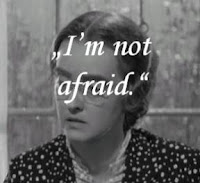
Now, Voyager let Bette Davis breath much more freely and allowed her to immerse into the character with a clearer approach and it gave her the opportunities to set her own tempo and agenda as she unfolded Charlotte’s intentions and thoughts for the first time – she could craft her scene more independently from the script and was given more freedom in Charlotte’s development and personality. Her scenes on the boat, the first exchanges between her and Paul Henreid and the following evolution of a conventional romance under unconventional circumstances show a woman who does her best to overcome her own uncertainties, who might mistake a kind of first love as the ultimate love but who finds personal fulfilment in a relationship that cannot evolve too far and therefore allows her to keep a sense of ‘rejection’, a feeling that she is used to and maybe pleases her more in this situation than she might actually realize. Bette Davis never lets the romantic aspect of the relationship between Charlotte and Jerry dominate the picture – instead she puts the focus on crafting Charlotte as a woman who gains the strength to recognize what she can expect from life, what she can ask for and what truly makes her happy. The final sentence of the movie sums up much more than the love between Charlotte and Jerry but rather her whole development as she did not become a dreamer but rather a realist, finally able to face life as it is instead of imagining how it could be – something that wasn’t possible for her before. Bette Davis made the wise decision to constantly underplay her role, even in her moments close to a nervous breakdown, because this way she could beautifully capture the spirit of a woman who found new meaning and purpose in life but who nonetheless cannot leave her past behind completely. A sudden emerging into a beautiful swan with unexpected self-confidence could have worked in the context of the story but Bette Davis’s approach stayed more in context to the character. When she informs Jerry that she used to be ill and is not quite well yet or eagerly puts on a beautiful dress only to be unsure later if she is really able to stand the attention of other people again demonstrates that she perfectly understood that a change of character cannot come overnight. But at the same time Bette Davis avoided any emphasis of Charlotte as an unfortunate victim which would have been a too noticeable contrast to her later scenes. Instead, her Charlotte is mostly careful and thoughtful, reflecting her situation and possibilities. Bette Davis could have played her affection for Jerry as a revenge on her mother who once before rejected a man that she met on a ship and for whom the idea of an affair between her daughter and a married man must be an absolute horror but she gave an honest touch to this romance and shows that her affection is true and again beautifully in harmony with her character – an ideal, fairytale like romance without any obstacles could only seem too perfect for a woman like Charlotte and so her rejection of such an opportunity later in the movie makes her own view of her own character much more intriguing. And this moment, too, could have been seen as a way for Charlotte to take revenge on her mother – but Bette Davis kept the intentions of Charlotte always clear and showed that she has reached a point in her life where she is ‘not afraid’ to make her own decisions, regardless of what her mother might think or want. In her relationship to Jerry, Bette Davis lets Charlotte be romantic, strong, insecure, curious but mostly trustworthy – a characteristic that is important for both of them and more than anything shapes their love and respect for each other, made plausible by Bette Davis’s intellectual approach to a highly emotional aspect of her role.
But even if the romance of
Now, Voyager is the main reason for its ongoing popularity, it’s the relationships between the female characters that are responsible for the movie’s most memorable and strongest moments. As mentioned before, the relationship between Charlotte and her mother is never as deeply explored as it might have been and the first scenes between them are a rather clichéd display of ‘good vs. evil’ but Bette Davis and Gladys Cooper understand their craft and know how to engage the audience without overdoing their scenes together. But both actresses mostly shine after Charlotte returns from her trip and made her first experiences of love and, more importantly, life. Bette Davis carefully lets Charlotte test her new-found possibilities – she lets her be almost forcefully nonchalant at first, trying to cover any insecurities and fears, but just as quickly finds her returning to a more doubtful state of mind again even if Charlotte has developed a sense of unwillingness to go back to her old life completely. Her most impressive work in
Now, Voyager is clearly Bette Davis’s ability to tangle all the different thoughts and feelings of Charlotte towards her mother – she tries to hold her own by putting on a masque of light amusement, she more than once finds herself unable to hide her disappointment whenever she faces another rejection and later she shows that Charlotte still feels an certain amount of love for her mother once she has found a way to communicate with her on a more equal level, a level on which Charlotte begins to see her mother’s behavior as mere eccentricities and which is again displayed by Bette Davis with more maturity and honesty than before. It’s only after another incident that she lets Charlotte erupt for the first time but it’s a moment that is too short for any grand gestures and Bette Davis again made the wise decision to stay calm and reserved even during this emotional outburst. Most of all she managed to display that Charlotte possesses more strength than her mother in the long run – Mrs. Vale may gain her power from her dominance and control over her daughter but Charlotte gets her strength from new self-respect and respect for others. Bette Davis’s acting opposite Gladys Cooper almost stands for her entire performance that begins on a rather superficial level but soon develops into a strong and mature piece of work. And later the second important female relationship in Charlotte’s life begins when she stops being a daughter and suddenly becomes a mother to a young girl who also suffers from a lack of love and subsequent self-loathing. Again, the script pushes itself too much in the foreground in this development as the obvious parallels and ‘second chances’ are too dominant to be ignored but Bette Davis probably knew that the audience which has followed her so far would also eagerly follow her further – just like her first scenes, those moments opposite June suffer too often from the constructed execution and do not give Bette Davis the same kind of freedom anymore that she had enjoyed opposite Gladys Cooper and Paul Henreid, but Bette Davis again avoided too much sentimentality and displayed how much the realization that another human being truly needed her and whose life was turned for the better thanks to her gives Charlotte much more fortitude and dignity than any new wardrobe or hairstyle ever could, again emphasizing the internal development of Charlotte Vale as the main aspect of
Now, Voyager.
In the end, it’s a performance that combines a remarkable understanding of the character’s personal journey with an undeniable talent for adding unexpected amounts of depth and truth to the story – and even if Bette Davis was not always able to overcome the clichés put before her, she still made all those moments touchingly intriguing. Bette Davis has rarely ever been so charismatic and hardly ever before or again allowed herself to be so completely in touch with the sentimentality of the story without actually becoming a part of it. It’s a mature and thought-through piece of work in a movie that could have existed with a purely emotional approach, too, but gained a vast portion of credibility thanks to Bette Davis’s central work that explored all the possibilities of the role while still working in harmony with the broader goals of the story.
Now, Voyager might still be a rather melodramatic and superficial recount of a familiar story but Bette Davis single-handedly lifted it to a level where melodrama might almost be taken for art. The illusion might be neither perfect nor truly convincing but thanks to Bette Davis it is still entirely believable.


 Anyway, this discussion is about West Side Story. If there is anyone who doesn’t know the story yet (but could there be?), here’s a little summary: it’s about two street gangs, the Jets and the Sharks. The Jets are typical all-American boys while the Sharks are immigrants from Puerto Rico. They fight each other for the dominance on the streets and things turn tragic when Tony, the former leader of the Jets, falls in love with Maria, the sister of Bernardo, the leader of the Sharks. When I mention that the story was modeled after Shakespeare’s Romeo and Juliet it’s probably clear very soon that things will not end well.
  One of the trailers of West Side Story says that ‘Unlike other classics, West Side Story grows younger’. This is actually very true and only half the truth at the same time. West Side Story is full of these contradictions. Is there another movie that is so dated and so timeless at the same time? So flawed and so flawless, all at the same moment?
 When a musical is transferred from the stage to the screen, there are various ways to do that: one can change it so it completely exists in its new environment (like Chicago) or one can use the new medium while also keeping the stage roots intact (like Oliver!) . In the case of West Side Story, it was probably the work of Jerome Robbins to keep it as close to the stage as possible. Even though the movie begins with very impressive shots of New York from above and the gangs are dancing through the wide streets of the city, the movie always keeps a rather ‘inside-feeling’ and the possibilities that the movie screen gives never seem used or wanted.

 Even during those dances on the street, the movie always keeps the feeling of a filmed stage production which basically is one of the reasons why the movie is so dated and timeless at the same time. This is basically the deciding matter if one will love or reject the movie – if one can accept dancing street gangs, then the movie will give a you a lot. If you think they look ridiculous, then the movie is simply not for you. Dancing street gangs are certainly something that works much better on the stage – in the theatre, it’s much easier to accept certain things and to see it for what they are in an obviously make-believe environment. In a movie, it’s much harder to combine the elements of a musical with the reality of the medium. And so, instead of really trying to change the tone of the musical for the screen, the whole production was mostly just transferred without betraying its roots. One has to accept this, one has to accept that dancing street gangs are simply artistic expressions. In the world of West Side Story, aggression, brutality, repression are expressed in dance – it’s a musical, after all! And it’s thanks to the brilliant choreography of Jerome Robbins that these dances are still a joy to be seen and so wonderfully express all the emotions of the characters. As I said, dated and timeless. That’s West Side Story.

 And the movie also suffers from the simple fact that the two leading characters, the one that should carry the story, are never as interesting as the supporting characters. Especially Tony is an extremely underwritten and confusing character as it’s hard to believe that this naïve and almost totally inexperienced baby-face could once have been the leader of a street gang. In the case of the movie version, this thin writing is combined with the miscast of Richard Beymer who obviously has the talent to play Tony. His desires, his pain in the final scenes, his love for Maria, it’s all done extremely well but one can’t get past the fact that he is totally wrong the part, physically. It’s like casting Danny DeVito as Stanley Kowalski – it doesn’t matter how much talent the actor has, sometimes looks do matter.
 Maria is certainly the more interesting character of the two and this also underlines the fact that both the play and the screen adaptation seem to be more interested in the Sharks than in the Jets. Maria is more down-to-earth, worried and lovely, just as loving as Tony but not as naïve. Natalie Wood has received a lot of criticism for her performance but to me, she is just outstanding. I can’t judge her accent since I don’t know how people from Puerto Rico are supposed to sound like, but her acting is surely first-rate. She wonderfully displays all of Maria’s feelings and her face is so angel-like that she lights up the screen whenever she appears. Her whole character is supposed to be a ray of light in this movie – her white dress at the dance that makes her noticeable even in the largest crowds, her light nightgown that she wears while Anita confronts her about Tony which makes her shine so bright in the dark room or her red dress at the end which again shows the beaming of the character. All these exteriors fit wonderfully to Natalie Wood’s ability to brighten up the screen which brings some light into the almost constant darkness of West Side Story. And I have seen West Side Story on the stage three times but there has never been a Maria who so completely broke my heart in the final scenes.


 But even though Natalie Wood shines in her part, it’s the supporting players that make West Side Story. Russ Temblyn is wonderful as Riff, portraying all the feelings of this young man – insecurity and fear, hidden by arrogance and brutality. George Chakiris surely shouldn’t have won an Oscar but there is no denying the elegance and subtle danger he brings to the part. But it’s not only the leaders of the gang, even all the supporting players are portrayed very memorable. But while the movie seems to prefer the principle characters of the Sharks, it gives more chances to shine to the supporting players from the Jets. The Sharks are allowed to complain a bit about how mistreated they feel in America but it’s the guys from the Jets who really can show their inner pains and frustration as they live in a world that doesn’t seem to want them.

 But of course in the end, there is one person in West Side Story that justly dominates every discussion about it: Rita Moreno. I have seen Anitas who danced better, I have seen Anits who sang better but never have I seen an actress bring the same amount of energy and fire to the part and the movie as a whole. The role of Anita is supposed to be a scene-stealer and it would be hard to screw that part up but Rita Moreno does still so much more here. This is one of the few cases where a supporting performance both carries and supports the movie. She doesn’t just dance her part, she acts it. She doesn’t just act her part, she lives it! It’s impossible to take your eyes off her whenever she appears on the screen. There is already a lot of energy and movement in West Side Story, but Rita Moreno manages to even add to that. Of course, the part of Anita is not just dancing and singing, it’s also the best-written part of the whole story. Anita is the conscience of the tale, torn between her loyalty to the Sharks and her love to Maria, suffering from tragedy but still determined to do what’s right. It’s a real showcase for any actress but Rita Moreno forever left her mark on this role.


 I’ve already mentioned Maria’s costumes which brings me to another big plus of this movie: the technical values. The costumes that so wonderfully separate the Jets from the Sharks, are just one of the many wonders in this film. Who can forget the amazing Art Direction that, unlike the script and the direction, so wonderfully combines the stage roots of the production with the possibilities of movies? It all seems so fake and real at the same time and every set has its own tone, it’s own mood. The Bridal shop with it’s warm colors, Maria’s little bedroom with the colorful doors that show so much diversity in a world that doesn’t want it, the almost claustrophobic atmosphere under the highway or Doc’s shop, a little island of security which cannot keeps its innocence in this war. And then there is the astonishing cinematography. It’s mostly this that keeps the movie from really becoming a taped stage production. The camera that is almost always moving and constantly finds new angles and perspectives gives the movie an unforgettable living feeling – the dances become even more agile, the lover’s faces shine even brighter.


